
Harmless — Protected Species
Eastern Water Skink
Eulamprus quoyii
One of Australia's largest skinks — a robust, semi-aquatic lizard found basking on rocks beside creeks, rivers, and ponds across NSW.
0428 458 856Available 24 hours · 7 days · Public holidays
NPWS Licensed
5.0 · 47 Reviews

Scientific Name
Eulamprus quoyii
Average Length
25 – 30 cm (body)
Danger to Humans
Harmless
Activity
Diurnal (daytime)
Identification
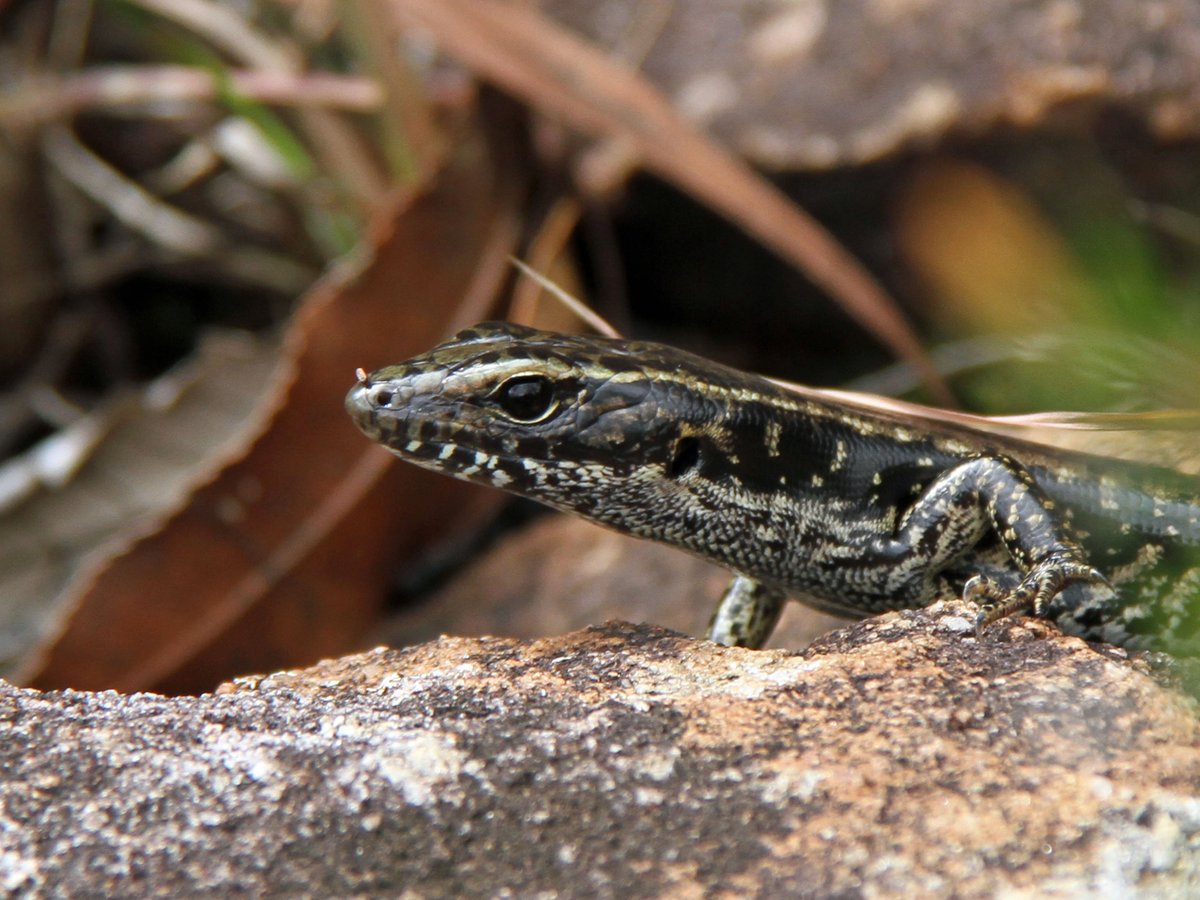
- Colour: Olive-brown to golden-brown back with a pale cream or yellowish underside. Dark brown flanks with scattered pale spots or flecks.
- Size: One of Australia's larger skinks — body length 25–30 cm, total length (including tail) up to 55–60 cm. Noticeably stocky and robust.
- Head: Large, prominent head with a blunt snout. Much larger than the Common Garden Skink — easily distinguished by size alone.
- Limbs: Strong, well-developed limbs suited to moving across rocks, logs, and the ground near water.
- Tail: Long, often regenerated (regrown after autotomy). The regrown tail appears lighter and smoother in texture.
Eastern Water Skinks are territorial and can be quite bold — they'll stand their ground and may even take food from a patient observer's hand at picnic areas.
Habitat & Distribution in NSW
The Eastern Water Skink is widespread throughout coastal and sub-coastal NSW wherever permanent water exists:
- Rocky creek banks, river edges, and lake margins across coastal NSW
- National parks and bushland reserves with permanent waterways
- Urban parks with streams, ponds, or stormwater channels
- Common in the Blue Mountains, Hunter Valley, Illawarra, and all major Sydney waterways
- Ranges from Queensland border to Victoria along the coast and tablelands
Behaviour & Diet
Behaviour
- Basks prominently on warm rocks and logs beside water
- Dives into water when threatened — strong swimmer
- Territorial — males defend basking spots vigorously
- Live-bearing (viviparous) — gives birth to 2–9 young
- Active from late winter through autumn
Diet
- Insects and other invertebrates
- Frogs and tadpoles
- Small fish and yabbies
- Berries and soft fruit
- Smaller skinks (occasionally)
Is it Dangerous?
The Eastern Water Skink is harmless to humans. It may bite if handled — the jaws are strong enough to pinch — but it is not venomous and cannot cause a serious injury.
- Non-venomous — no medical risk from a bite
- May pinch firmly if grabbed — avoid unnecessary handling
- Fully protected under NSW law
- An important part of local ecosystems — leave them undisturbed