
What Happens During a Professional Snake Removal?
Most people imagine someone arriving with a hook, catching the snake and leaving. In reality, professional snake removal is a structured process — designed to protect people, pets and the snake itself.
Finding a snake in your backyard, garage, pool area or inside your home can be stressful. One of the first questions people ask is: what actually happens after you call a professional snake catcher?
In New South Wales, native snakes are protected wildlife and should only be handled by appropriately licensed professionals using safe relocation practices. This guide explains exactly what happens during a professional removal — from the first phone call through to relocation and prevention advice.
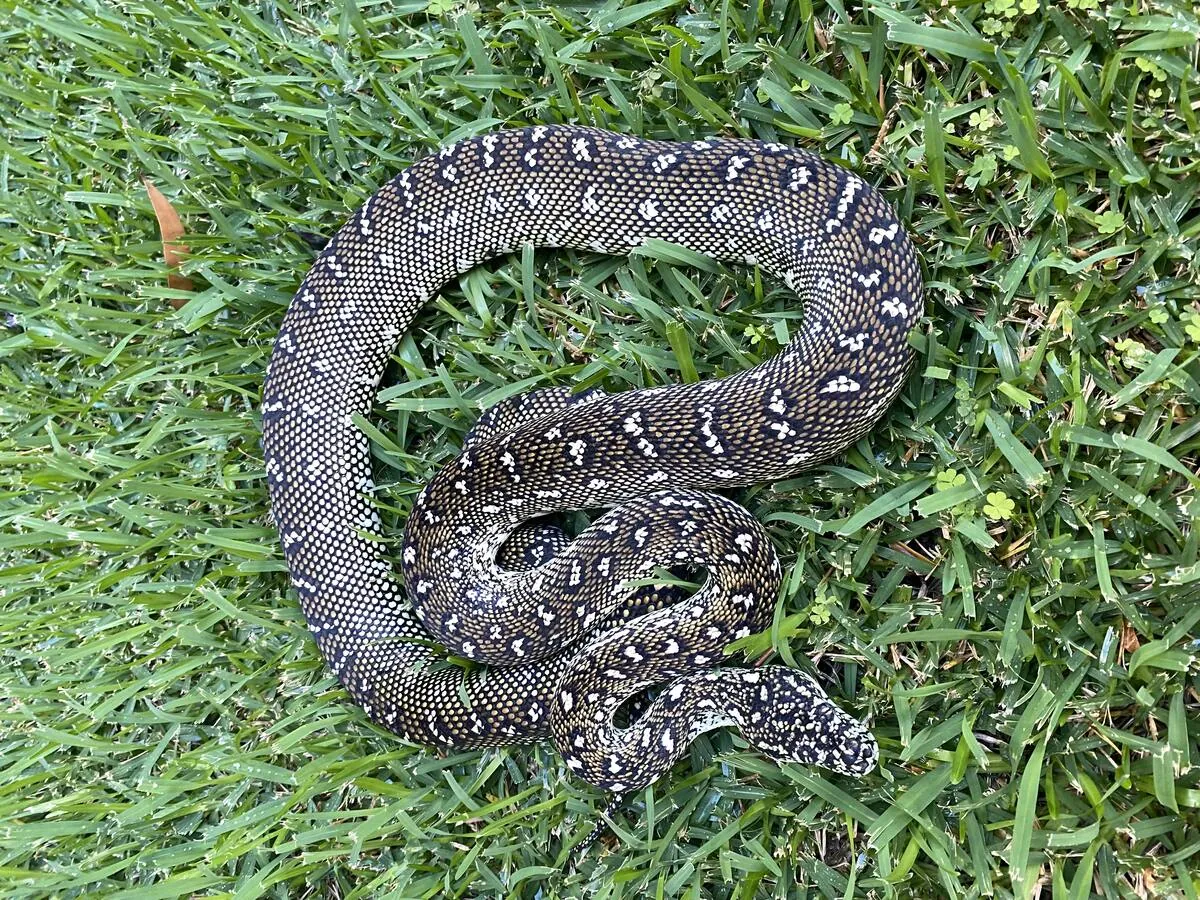
The Initial Call – Gathering Critical Information
Professional snake removal starts before anyone arrives. When you call a snake catcher, they are trying to answer several important questions:
- Where was the snake seen — indoors or outdoors?
- Is it still visible?
- Are children or pets nearby?
- Approximately how large is it?
- What colour or pattern does it have?
- Has anyone attempted to move it?
An experienced catcher uses this information to prepare equipment, assess urgency and begin forming an idea of likely species and behaviour before arriving. Species identification based purely on descriptions is unreliable — photos taken safely from a distance are often more useful than verbal descriptions.
What You Should Do While Waiting
- Keep visual contact if safe
- Keep children and pets away indoors
- Do not try to trap, move, or kill the snake
- Close doors if the snake is inside
- Avoid standing over or cornering it
Arrival and Site Assessment
Once onsite, a professional snake catcher rarely rushes straight toward where the snake was last seen. The first stage is assessment.
Experienced catchers evaluate environmental conditions (temperature, sun exposure, nearby shelter, water, vegetation), snake behaviour factors (whether it's defensive, moving or sheltering), and human risk factors (pets, foot traffic, children nearby). Snakes behave differently depending on time of day, weather and habitat — morning snakes may seek warmth, midday snakes often shelter, late afternoon movement can increase in warmer weather. Field experience often becomes more important than simply spotting the animal immediately.
Locating the Snake
This is often the longest part of the entire process. Contrary to what you might expect, most removals are not instant.
- Garden beds and dense vegetation
- Retaining walls and rock piles
- Roof cavities and ceiling spaces
- Garages, sheds and pool equipment areas
- Wood piles and under decking
- Storage zones and outdoor furniture
Snakes use edges, cover and temperature gradients. Experienced catchers narrow likely locations by combining recent weather, species habits, escape routes, property layout and the last confirmed sighting. In many situations, the snake may already have moved on before arrival — that does not mean the call was unnecessary. Confirming a snake has safely left can still provide reassurance and reduce unnecessary risk-taking.
Safe Capture Techniques
Once located, capture begins. This is where professional experience matters most.
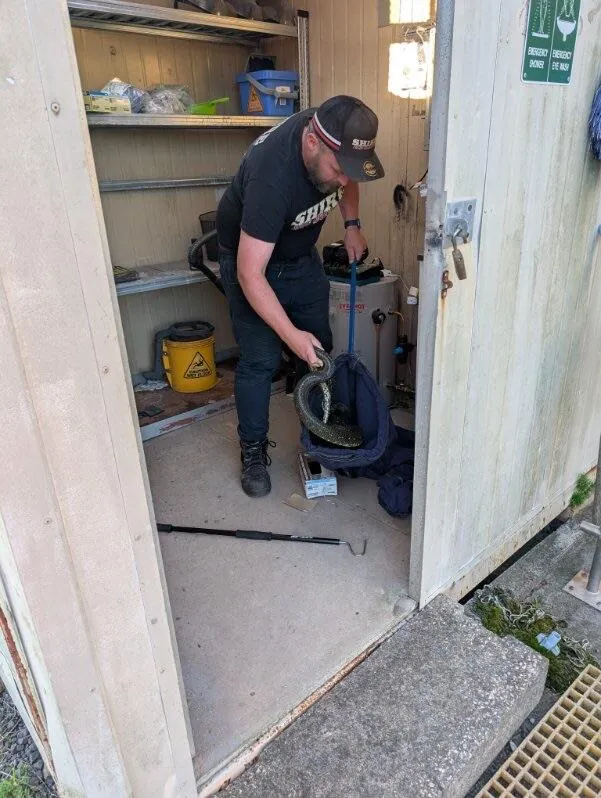
Snake catchers aim to maintain safe distance, avoid stressing the snake, prevent escape into inaccessible areas and avoid injury to the animal. Capture methods vary by species, location and environment — a small juvenile behaves differently from a large adult, and removing a snake from open lawn differs from removal inside cupboards or roof spaces. Specialised equipment includes snake hooks, transport containers, capture bags and secure holding systems. Capture is usually calm and deliberate rather than dramatic. Humane handling aims to avoid unnecessary force or prolonged restraint because reptiles can be injured through poor technique.
Species Identification and Assessment
After capture, professionals confirm species identification. Across NSW, commonly encountered snakes include:
- Eastern Brown Snake
- Red-bellied Black Snake
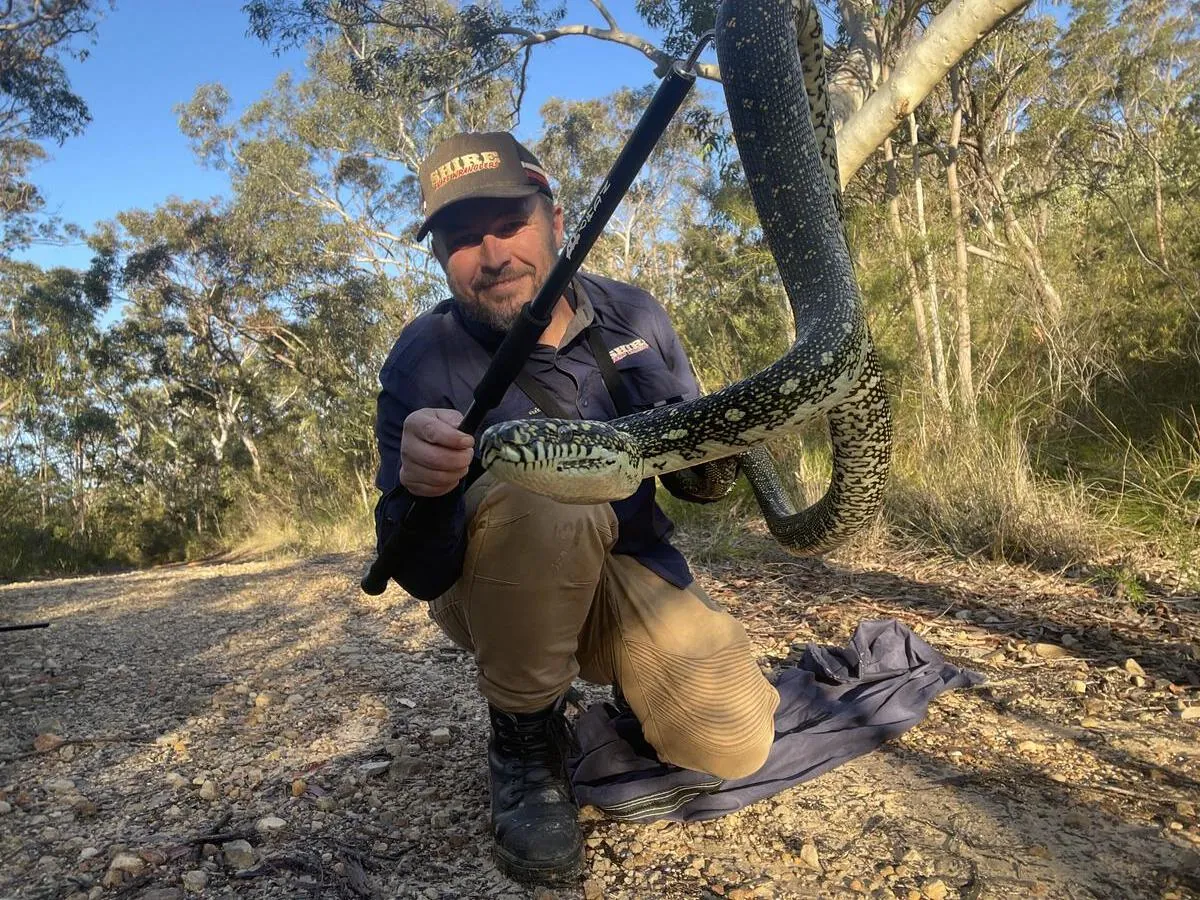
- Diamond Python
- Green Tree Snake
- Tiger Snake (some regions)
Identification matters because different species influence relocation decisions, habitat requirements and behaviour expectations. Professionals may also assess body condition, visible injuries, stress indicators and approximate age. Occasionally snakes require wildlife assessment if they appear injured or unhealthy. This stage also allows homeowners to better understand why the animal appeared on the property in the first place.
Secure Transport and Relocation
One of the biggest misconceptions is that snake catchers simply 'take the snake far away.' Professional relocation is more considered than that.
Captured snakes are transported securely and released into suitable habitat while complying with wildlife requirements and animal welfare expectations. A relocation decision may consider habitat suitability, distance from human activity, shelter availability, water access and species requirements. The goal is not punishment or removal from existence — the goal is reducing immediate conflict while allowing the snake to continue performing its ecological role. Snakes remain important predators that help regulate rodent populations and support healthy ecosystems.
Prevention Advice for the Property
A professional removal normally ends with prevention recommendations. This is often the most valuable part of the visit.
Common snake attractants include shelter (timber piles, dense gardens, stored materials), food sources (rodents, pet food, bird feeders), access points (gaps under sheds, open drainage, loose fencing) and habitat features (long grass, rock piles, untidy edges). Typical recommendations include keeping lawns maintained, reducing clutter, sealing obvious entry points, controlling rodents, trimming dense vegetation and storing materials off the ground. Removing attractants reduces future encounters more effectively than repeated removals alone.
Common Questions About Professional Snake Removal
Will the snake come back after removal?
Not usually to the exact same location, but properties can attract other snakes if conditions remain suitable. Removing food sources, shelter and entry points reduces future encounters more effectively than repeated removals.
Do snake catchers kill snakes?
No. Professional snake removals focus on humane relocation where permitted and appropriate. Native snakes are protected wildlife under NSW law.
What if the snake disappears before the catcher arrives?
This is extremely common. The catcher may still inspect the area, identify likely shelter points and provide prevention advice even if the snake is not found. Confirming a snake has safely left still has value.
Is professional snake removal worth it?
Attempting DIY snake removal creates unnecessary risk. Professional catchers bring experience, equipment and safe handling practices that reduce danger for people and wildlife alike.
Final Thoughts
Professional snake removal is much more than catching and relocating a snake. A quality service includes assessment, risk management, species identification, humane handling, relocation and prevention advice.
If you find a snake on your property, the safest approach is simple: keep your distance, secure people and pets, monitor the location if safe — and contact a licensed professional.
Need a licensed snake catcher in NSW?
Fast response · Safe, humane relocation · Metro and regional NSW
0428 458 856Available 24/7 across NSW