
What To Do If Your Dog Gets Bitten by a Snake
A complete emergency guide for NSW pet owners — recognise the symptoms early, follow the right steps, and act fast. Every minute counts.
Are Snake Bites in Dogs Common in NSW?
Every year across New South Wales, thousands of dogs encounter snakes in backyards, parks, bushland and suburban properties. Curious by nature, dogs often investigate snakes with their noses and paws — placing them at significant risk of a potentially life-threatening bite.
Australia is home to some of the world's most venomous snakes. While many encounters end without injury, a venomous bite can rapidly become a veterinary emergency. The good news is that many dogs survive snake bites when they receive prompt treatment.
Recognising the signs early and acting immediately are the most important things you can do.
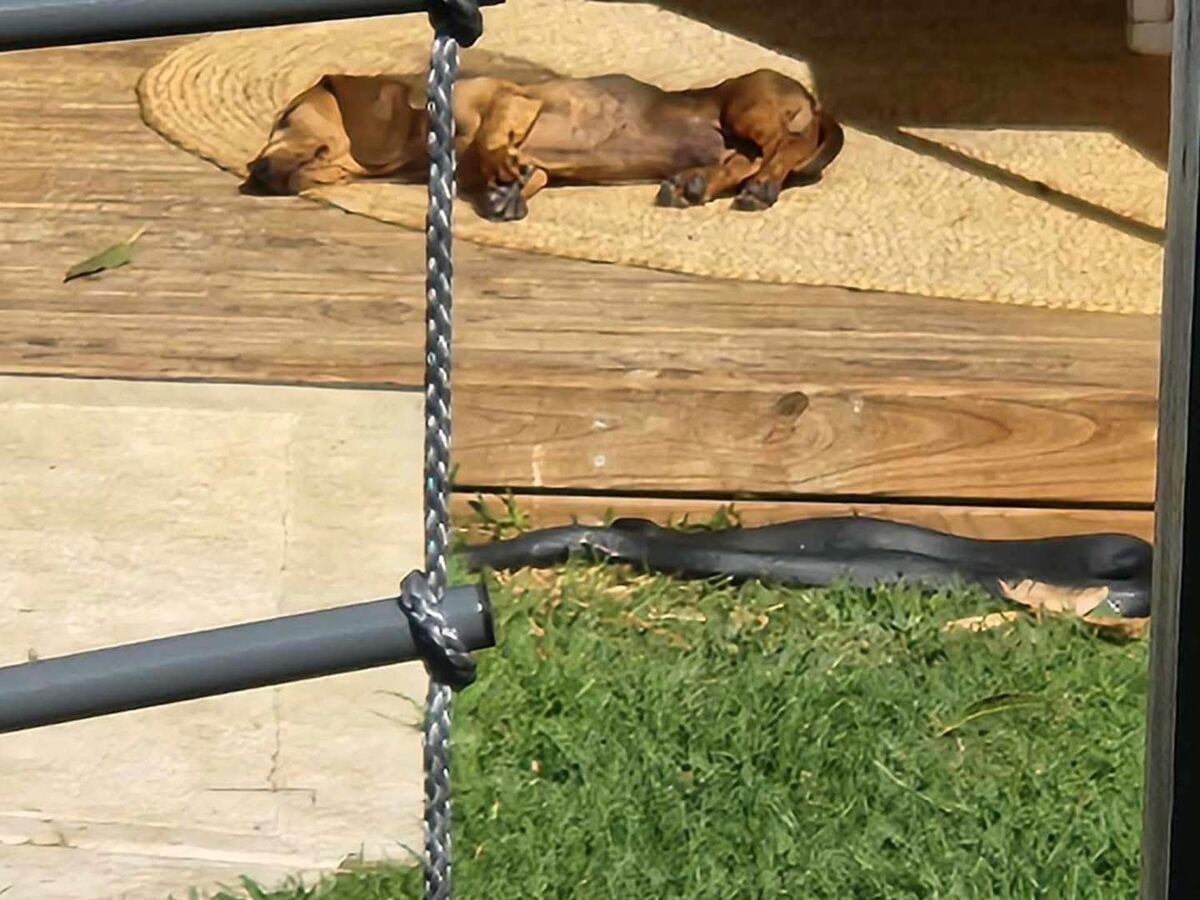
A dachshund sleeps on the deck while a Red-bellied Black Snake basks below. The dog was unharmed — the snake was safely relocated by Shire Snake Wranglers. Photo: client supplied.
Signs Your Dog May Have Been Bitten by a Snake
One of the biggest challenges is that many owners never actually witness the bite. Dogs may appear normal before deteriorating rapidly, and symptoms can develop within minutes or take several hours to appear. If your dog was outdoors and is acting strangely, always consider a snake bite.
Early Signs — Act Immediately
- Sudden weakness or wobbliness
- Excessive drooling or salivation
- Vomiting
- Shaking or trembling
- Collapse followed by apparent recovery
- Dilated pupils
- Rapid breathing
- Lethargy or unusual stillness
Advanced Symptoms — Emergency
- Hind leg weakness or paralysis
- Difficulty standing or walking
- Laboured or shallow breathing
- Muscle tremors
- Blood in urine
- Inability to swallow
- Complete collapse
- Respiratory failure
Important: Many owners report their dog collapsing, apparently recovering, then deteriorating again. This pattern is commonly associated with snake envenomation — never assume recovery means the danger has passed.
What To Do Immediately
Follow these steps in order. Every minute without treatment matters.
Step 1: Stay calm
Your dog will often mirror your behaviour. Panic increases stress and elevates heart rate, which may help venom spread more rapidly. Remain calm and focus entirely on getting to a vet.
Step 2: Remove your dog from danger
Move your dog away from the snake without approaching the snake yourself. Do not try to catch, kill or corner it. If safe, photograph from a distance — but never delay treatment to identify the species.
Step 3: Restrict movement immediately
Movement accelerates venom through the lymphatic system. Carry small dogs, use a blanket as a stretcher for larger dogs, and lift them into the car. The less your dog moves, the better.
Step 4: Apply a pressure bandage (if bite is on a limb)
Apply a firm elastic bandage over the bite area and continue bandaging the entire limb. It should be firm but not cut off circulation. Keep the limb immobilised. Do not delay transport trying to achieve perfect bandaging.
Step 5: Get to a vet immediately
Call ahead as you travel so the clinic is prepared. Do not wait for symptoms to appear or worsen — many dogs deteriorate quickly. Time is the single most important factor in survival.
What NOT To Do
Several common reactions can actually worsen the situation. Avoid these:
Do not Wash the bite site
Venom residue helps vets identify the species using diagnostic testing.
Do not Use a tourniquet
Tourniquets can cause severe tissue damage and are not recommended.
Do not Cut or suck the wound
These outdated practices are ineffective and may cause further injury.
Do not Wait for symptoms
Dogs can appear normal before deteriorating rapidly. Get to a vet immediately.
Do not Attempt to catch the snake
Most bites to people occur during attempted handling. Native snakes are also protected wildlife.
Which Snakes Are Most Dangerous to Dogs in NSW?
Because snake identification is difficult and dangerous, every suspected bite should be treated as a veterinary emergency regardless of species. That said, knowing which snakes are present in NSW helps explain why a bite is always serious.
Eastern Brown Snake
Responsible for more serious snake bite cases in NSW than any other species. Venom affects blood clotting, muscles and the nervous system. Found in suburban backyards, farms and bushland across eastern NSW.
Tiger Snake
Found around waterways, wetlands, dams and coastal areas. Venom causes severe neurological symptoms and can lead to paralysis. Dogs are frequently bitten in waterside gardens and semi-rural properties.
Red-Bellied Black Snake
Less aggressive than Eastern Browns but still capable of delivering a medically significant bite requiring urgent treatment. Common around creeks, dams and bushland edges across NSW.
Death Adder
Less commonly encountered but highly venomous. Ambush hunters that sit very still in leaf litter — dogs frequently stumble onto them without warning. Found in coastal heath and forested areas.
How Vets Treat Snake Bites in Dogs
Vets diagnose snake bites using clinical symptoms, blood and urine testing, snake venom detection kits and clotting assessments. Owners often never see the snake — vets can still diagnose envenomation from symptoms and tests alone.
Antivenom
Neutralises circulating venom. The most effective treatment for serious bites — the appropriate type is determined from diagnostic findings.
Intravenous Fluids
Supports circulation and organ function during recovery.
Oxygen Therapy
Dogs experiencing respiratory distress may require oxygen support.
Monitoring & Hospitalisation
Hospital stays range from one day to several days depending on blood clotting, paralysis and organ function.
Survival rates approach 88% when treatment is administered quickly. Delays dramatically increase the risk of fatal complications.
How to Reduce the Risk of Snake Bites on Your Property
While you cannot eliminate snake risk completely, you can significantly reduce the likelihood of encounters around your home and garden.
Keep grass short
Long grass is one of the most common places snakes use for cover. Regular mowing is one of the most effective simple actions.
Remove rodent activity
Snakes follow food. Reducing mice and rats — by securing pet food, bird seed and rubbish bins — removes a key attractant.
Clear ground-level clutter
Timber piles, corrugated iron, garden waste and unused pots create ideal snake shelter. Remove or elevate them.
Supervise dogs near bushland
Keep dogs on a lead when walking in areas known for snake activity. Avoid dense vegetation and long grass.
Use designated paths
Do not allow dogs to run through dense ground cover or overgrown gardens, especially in spring and summer.
Know your snake catcher's number
If a snake is on your property, keep pets indoors, maintain visual contact from a safe distance, and call a licensed snake catcher.
Frequently Asked Questions
How do I know if my dog has been bitten by a snake?
Watch for sudden weakness, wobbliness, excessive drooling, vomiting, dilated pupils or collapse. Symptoms can appear within minutes or take hours. If your dog was outdoors and is acting strangely, treat it as a potential snake bite and get to a vet immediately.
Can a dog survive a snake bite?
Yes. Many dogs survive when they receive prompt veterinary treatment. Reports indicate survival rates approaching 88% with rapid treatment — the difference is often measured in hours.
How much does snake bite treatment cost for a dog?
Costs vary from several hundred to several thousand dollars depending on the severity, antivenom requirements and length of hospital stay. Pet insurance may help if snake bites are covered under the policy.
Should I try to identify the snake?
If you can safely photograph it from a distance, that may help the vet. But never delay treatment to identify the species — vets can test for venom type, and treatment often begins before the species is confirmed.
Can I give my dog antihistamines or paracetamol?
No. Do not administer any human medications. Many are toxic to dogs. Get to a vet immediately and let them manage treatment.
How can I reduce the risk of my dog being bitten?
Keep your lawn mowed, remove ground-level clutter and firewood piles, control rodents, supervise your dog near bushland, and keep them on a lead in areas known for snake activity.
Snake on Your Property?
Keep pets and children indoors. Don't approach it. Call Shire Snake Wranglers for fast, professional relocation anywhere across NSW.
0428 458 856Available 24/7 · Licensed NPWS Catchers · All of NSW