
Why Do Snakes Enter Homes During Summer?
It's not to attack you. Snakes enter homes for one reason: survival. Here's the complete guide for NSW homeowners.
Summer is peak snake season across New South Wales, and it's also the time when many homeowners discover snakes inside garages, roofs, bathrooms, laundries, sheds — and sometimes even living rooms.
One of the biggest misconceptions is that snakes deliberately enter homes to attack people or "move in." The reality is very different. Snakes enter residential properties for the same reasons every wild animal does — to survive. Rising temperatures, increased prey activity, breeding behaviour and the search for shelter can all bring snakes into closer contact with people during summer than at any other time of year.
Why Summer Is Peak Snake Season in NSW
Australia's snakes are ectothermic (cold-blooded), meaning they rely on external temperatures rather than producing their own body heat. As temperatures increase through spring and summer, snakes become significantly more active — warmth allows them to hunt more efficiently, digest food faster, travel longer distances, find mates and establish territories.
During winter many NSW snakes enter brumation — a reptile version of hibernation. Once temperatures regularly exceed around 20°C, activity rapidly increases. This is why licensed snake catchers receive the overwhelming majority of call-outs between October and March.
The 5 Main Reasons Snakes Enter Homes
1. Looking for Cooler Shelter
Although snakes love warmth, they do not like overheating. On extremely hot summer days, exposed surfaces can exceed temperatures that are dangerous even for reptiles. Instead of remaining in direct sunlight, snakes seek places that stay cool, including under houses, garages, bathrooms, laundries, roof cavities, wall cavities, under decks and garden sheds.
Many homeowners are surprised to find a snake inside during a heatwave — in reality, it simply followed cool airflow through an open access point.
2. Following Food
Snakes don't come searching for people. They come searching for prey. Depending on the species, common prey includes rats, mice, frogs, small birds, bird eggs, possums, skinks and geckos. If your property has a healthy rodent population, there's a much higher chance snakes will also be nearby.
This is particularly common around:
Large pythons are especially known for entering roof spaces to hunt rats and possums.
3. Water During Hot Weather
Like every animal, snakes need water. During prolonged heat, natural water sources can dry up, making suburban yards attractive. Swimming pools, fish ponds, bird baths, dripping taps, garden irrigation, pet water bowls and damp garden beds all become magnets.
Water doesn't necessarily attract snakes directly — it often attracts the frogs and rodents snakes eat.
4. Searching for Mates
Summer is an important breeding period for many Australian snakes. Male snakes may travel several kilometres while searching for females, crossing roads, parks, bush tracks, residential streets and backyards along the way. When a snake is discovered on a property during breeding season, it is usually just passing through.
5. Urban Development Overlapping Habitat
Across Sydney, Western Sydney, the Central Coast, Wollongong, Newcastle and regional NSW, expanding suburbs are replacing the bushland, grasslands, wetlands and creek corridors where snakes have always lived. Encounters aren't increasing because there are more snakes — they're increasing because there are more people living where snakes naturally occur.
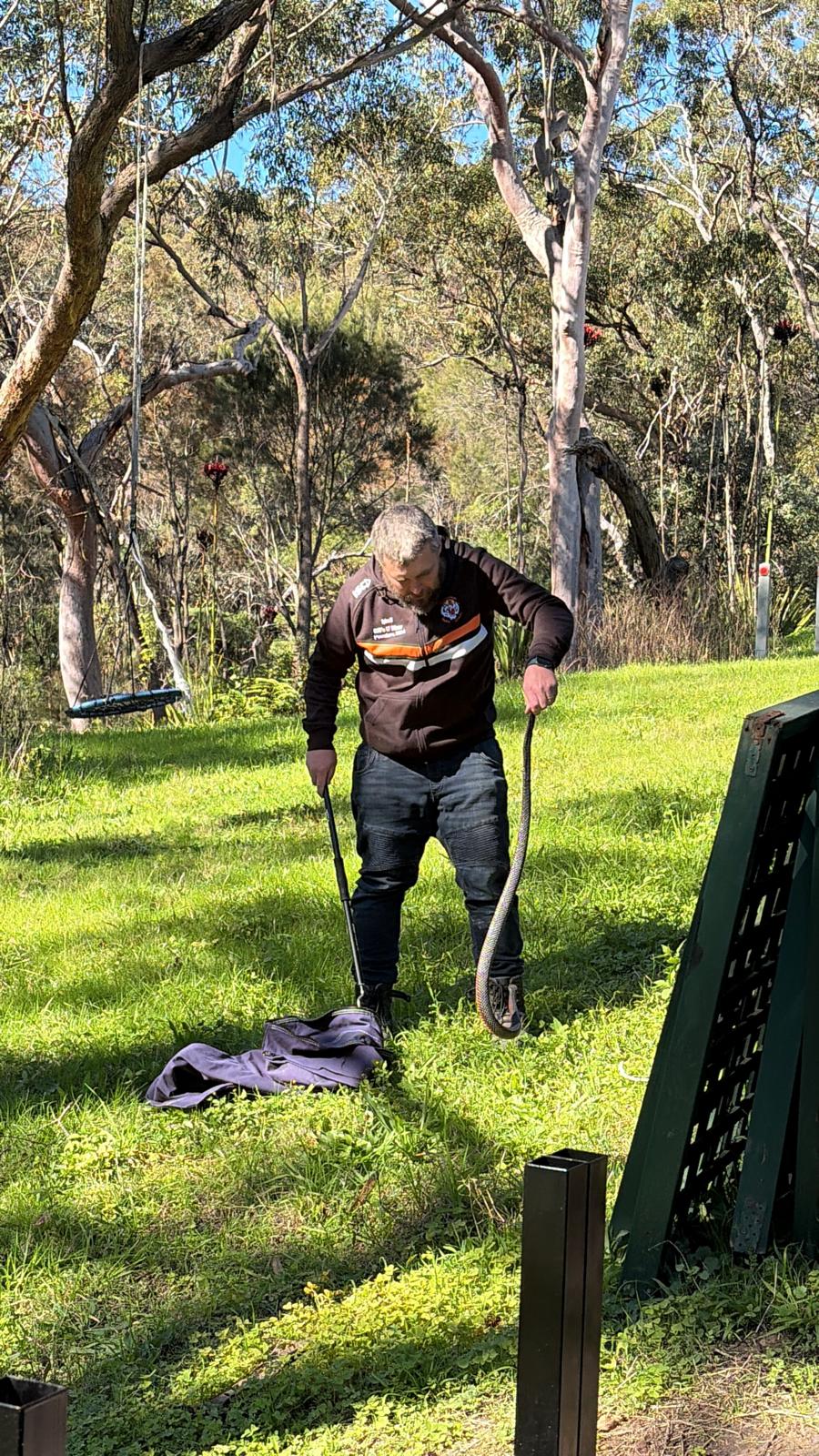
A licensed Shire Snake Wranglers catcher safely relocating a snake from a suburban property.
How Do Snakes Actually Get Inside?
Many people imagine snakes forcing their way inside. In reality, they simply use existing gaps. If a snake's head fits through an opening, the rest of its body usually can too.
Gaps under doors
Open garage doors
Damaged flyscreens
Roof tile gaps
Wall cavities
Plumbing penetrations
Air-conditioning pipe openings
Open windows
Under roller doors
Drainage areas
Common Places Snakes Hide Indoors
Once inside, snakes usually head somewhere dark, quiet and undisturbed. Finding a snake indoors doesn't necessarily mean it has been living there for weeks — many are discovered only hours after entering.
Behind washing machines
Under refrigerators
Bathrooms
Laundries
Under cupboards
Roof cavities
Garages
Shoe racks
Storage boxes
Do Snakes Actually Want to Live Inside Homes?
No. Homes are generally stressful environments for snakes. Inside a house there are bright lights, human activity, pets, loud noises and limited escape routes. Most snakes would prefer to leave if given the opportunity.
This is why licensed snake catchers can usually relocate snakes found indoors quickly — they're rarely establishing a permanent residence.
NSW Species Most Likely to Enter Homes
Eastern Brown Snake
VenomousAustralia's most medically significant snake. Often follows rodents around sheds, farms and suburban yards.
Red-bellied Black Snake
VenomousUsually found near creeks, wetlands and damp gardens where frogs are abundant.
Diamond Python
Non-venomousA non-venomous species frequently discovered in roof spaces hunting possums and rats. Excellent climber.
Green Tree Snake
Non-venomousOccasionally enters gardens and homes while hunting frogs and small reptiles. Generally very slender.
All species are motivated by the same basic survival needs: food, water, shelter and suitable temperatures.
Can You Prevent Snakes Entering Your Home?
No property can be made completely snake-proof. However, you can greatly reduce the chances by making your home less attractive across four areas:
Remove Food Sources
- Control rats and mice
- Store pet food securely
- Keep compost tidy
Reduce Shelter
- Remove piles of timber
- Clear rubbish
- Trim long grass
- Store materials off the ground
Seal Entry Points
- Install door weather seals
- Repair flyscreens
- Close gaps around plumbing
- Seal roof openings where practical
Manage Water
- Repair leaking taps
- Reduce standing water
- Maintain ponds and pools
What To Do If You Find a Snake Inside
Stay calm — panicking increases risk for everyone
Keep children and pets away from the area
Never attempt to catch or kill the snake
Close internal doors if safe to do so (to contain it to one room)
Watch from a safe distance without cornering it
Contact a licensed snake catcher immediately
Attempting to handle a snake is responsible for many snake bites in Australia each year — even with seemingly non-venomous species.
Final Thoughts
Snakes enter homes during summer for one simple reason: survival. They are seeking cool shelter, water, food or simply moving through natural habitat that increasingly overlaps with ours. Understanding these behaviours helps replace fear with practical awareness.
By reducing attractants around your property, sealing potential entry points and calling a licensed snake catcher if you encounter one, you can protect your family while ensuring these important native reptiles remain part of Australia's unique environment.
Frequently Asked Questions
Why are snakes more common during summer?
Warmer temperatures increase snake activity, allowing them to hunt, breed and travel more efficiently than during winter.
Are snakes attracted to air conditioning?
Not directly, but cool air leaking through door gaps or around buildings can lead snakes toward cooler shelter during extreme heat.
Do snakes enter homes to attack people?
No. Snakes are defensive animals that generally avoid people whenever possible. Most indoor encounters are accidental.
Does killing a snake stop others coming?
No. If your property continues providing food, shelter and water, another snake may eventually move through the area. Removing attractants is far more effective than attempting to kill wildlife.
Can snakes climb into roof spaces?
Yes. Species such as Diamond Pythons are excellent climbers and frequently enter roof cavities while hunting rats and possums.
Related Articles
Need a licensed snake catcher in NSW?
Fast response · Safe, humane relocation · Metro and regional NSW
0428 458 856Available 24/7 across NSW