
Can Snakes Climb Walls, Trees and Roofs?
The truth every NSW homeowner should know — which snakes can climb, why they do it, and how to reduce the risk of them accessing your home.
The Short Answer
Yes — but it depends on the surface, the species and the reason they're climbing.
Many people assume snakes only travel across the ground. In reality, numerous Australian species are surprisingly skilled climbers and regularly move through trees, shrubs, fences, retaining walls, sheds and roof spaces. While they can't cling to perfectly smooth vertical surfaces like glass, they can scale rough materials using powerful muscles and specialised belly scales.
Climbing is normal behaviour — not aggression. A snake found on your roof or in a tree is simply following food, warmth or shelter.
Can Snakes Climb Walls?
Snakes don't have sticky feet or suction cups. Instead they rely on friction, body strength and tiny imperfections in the surface. Their belly scales grip cracks and rough textures while powerful muscles pull the body upward using a movement called concertina locomotion — anchoring one section of the body while extending another forward, then pulling the rest up.
Surfaces snakes CAN climb
- Brick walls
- Sandstone walls
- Stone retaining walls
- Timber fences
- Rough rendered walls
- Tree trunks
- Rock faces
- Downpipes on brick walls
Surfaces they generally CANNOT climb
- Glass
- Smooth steel
- Polished metal
- Smooth painted concrete
- Plastic panels
- Clean Colourbond fencing
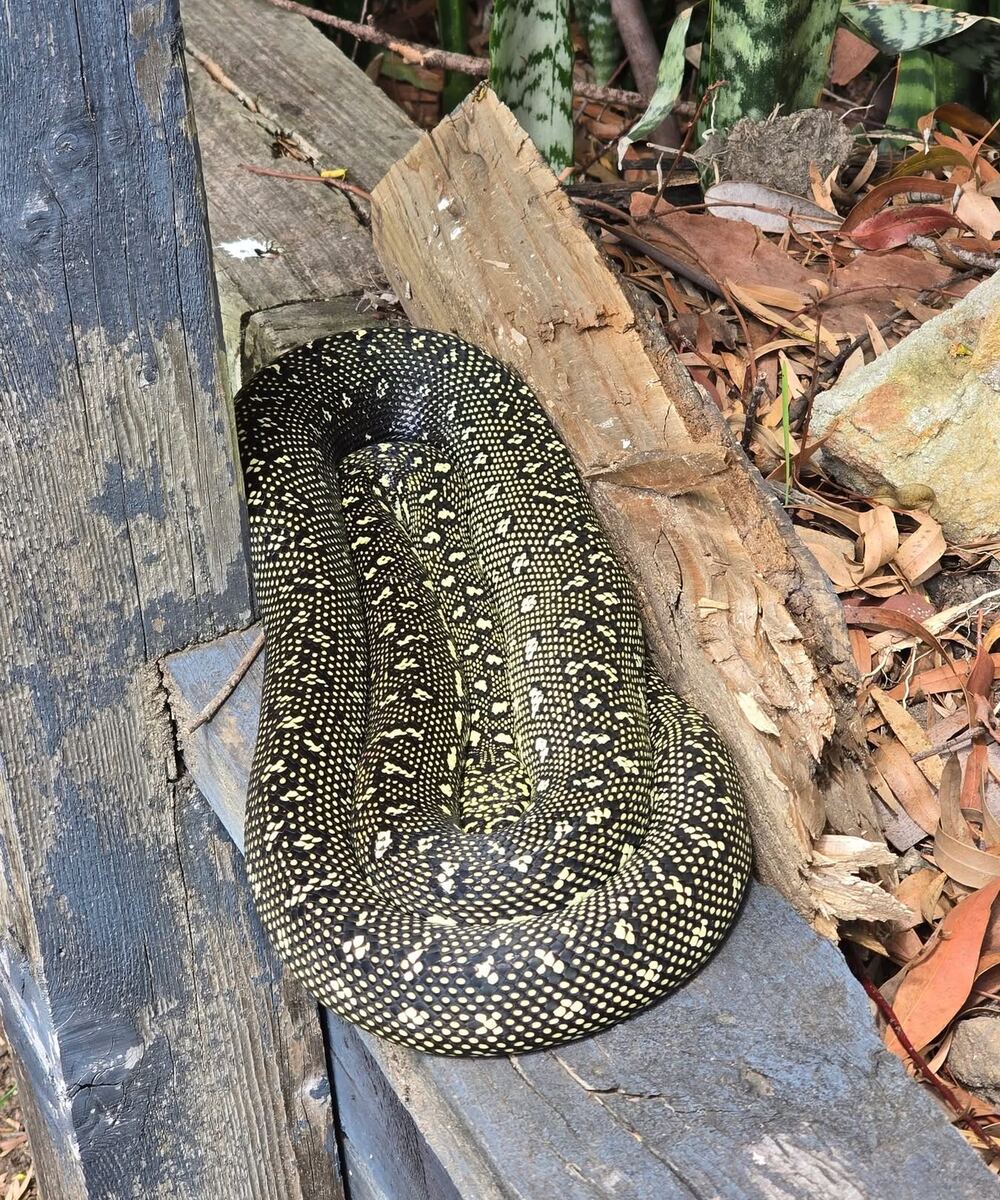
Diamond Python coiled on timber — these large pythons are excellent climbers commonly found in Sydney rooftops and gardens. Photo: Shire Snake Wranglers.
Which Australian Snakes Are the Best Climbers?
Not all snakes climb equally well. Here are the most common climbing species encountered across New South Wales.
Eastern Brown Snake
Pseudonaja textilis
Australia's most widespread venomous snake, commonly found throughout NSW. Although usually associated with open paddocks, Eastern Browns are surprisingly capable climbers. Juveniles are often seen in shrubs and small trees hunting skinks and birds. Adults can climb rough walls, fences and low trees. Extremely fast and agile.
Red-bellied Black Snake
Pseudechis porphyriacus
Common throughout eastern NSW near creeks, wetlands and waterways. Readily climbs fallen logs, low branches, rock walls and retaining walls. Frequently observed climbing over obstacles while travelling through suburban backyards.
Carpet Python
Morelia spilota
One of Australia's best climbers. Semi-arboreal by nature, Carpet Pythons regularly access trees, roof spaces, gutters, pergolas, garages and bird aviaries. Their muscular bodies wrap securely around branches while they move through tree canopies. Because they feed heavily on rats and possums, they're the most common species found inside residential roof cavities.
Diamond Python
Morelia spilota spilota
Found mainly around Sydney, the Central Coast and the South Coast. Homeowners are often surprised to discover one resting in a roof gutter, coiled beneath solar panels, wrapped around a pergola beam, or crossing roof tiles. Despite their size, Diamond Pythons move remarkably well through elevated structures.
Green Tree Snake
Dendrelaphis punctulatus
As its name suggests, highly adapted to climbing. Spends much of its life in vegetation hunting frogs, small birds, lizards and geckos. Demonstrates just how specialised some Australian snakes are for life above the ground.
Stephen's Banded Snake
Hoplocephalus stephensii
A nocturnal species found in rocky areas and forested habitat across coastal and sub-coastal NSW. Skilled at navigating rock crevices and elevated surfaces — often found sheltering in gaps between rocks, retaining walls and concrete slabs.
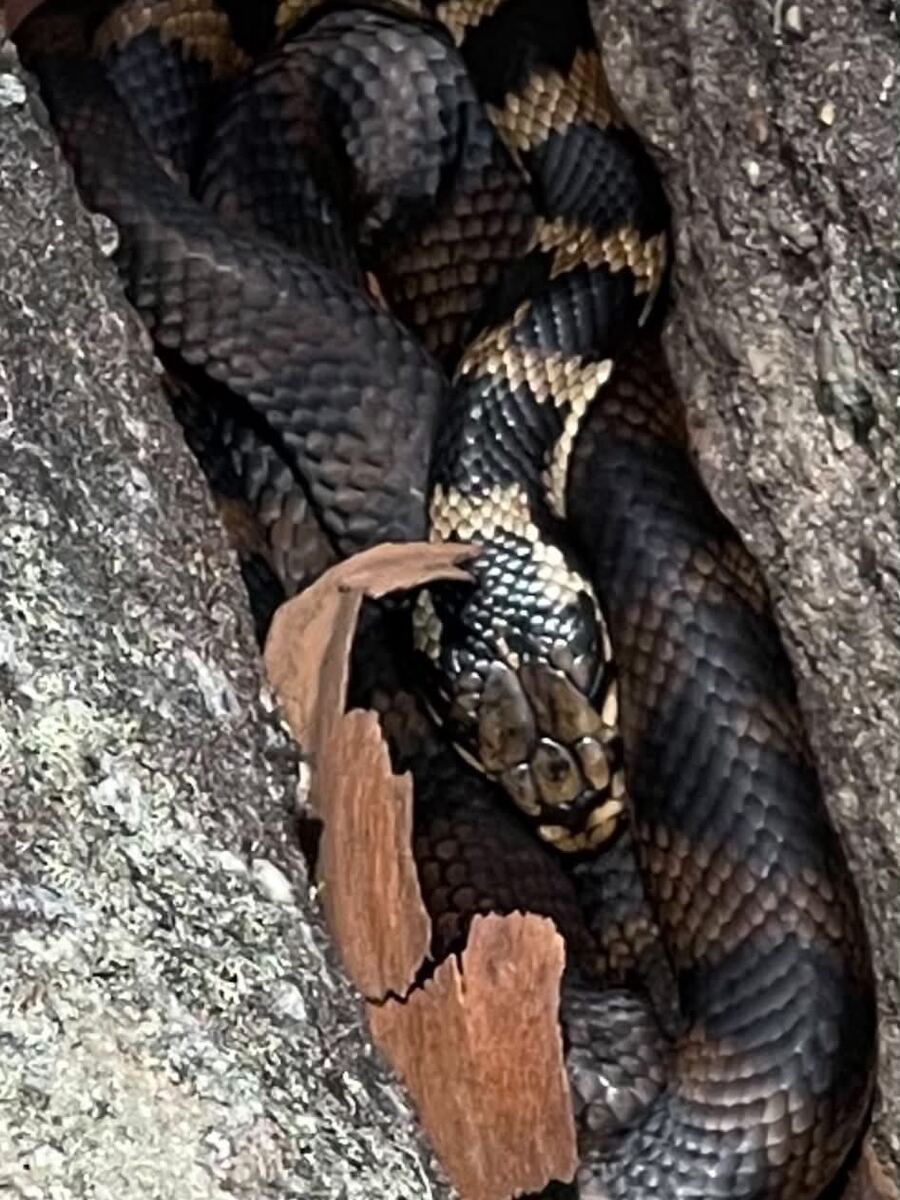
Stephen's Banded Snake sheltering between concrete slabs — highly adapted to navigating rock crevices, retaining walls and elevated surfaces. Photo: Shire Snake Wranglers.
How Do Snakes Climb Without Legs?
A snake's body contains hundreds of vertebrae connected by powerful muscles, allowing it to generate enormous gripping force. Instead of climbing with limbs, snakes:
Research has found that climbing depends heavily on surface texture. Snakes generally cannot climb completely smooth vertical surfaces because they need friction and small irregularities to generate movement.
Can Snakes Get Onto Roofs?
Yes — and it's much more common than many people realise. Snake catchers across NSW regularly remove snakes from roof gutters, house roofs, pergolas, verandahs, solar panel systems and ceiling cavities. In many cases, the snake hasn't climbed directly from the ground — it has used trees touching the roof, overhanging branches, climbing plants, timber fences, downpipes or pergola beams.
Why would a snake climb onto your roof?
Hunting food
Roof spaces commonly contain rats, mice, possums, nesting birds and bird eggs. Rodent infestations are one of the biggest reasons carpet pythons enter homes.
Seeking warmth
Roof cavities stay significantly warmer than outside air during cooler months. The warmth stored beneath roofing materials creates ideal basking conditions, especially in spring and autumn.
Finding shelter
Ceiling cavities provide protection from predators, heavy rain, wind, cold weather and human activity. For snakes, a quiet roof space can be an ideal temporary refuge.
Following prey
Sometimes the snake isn't interested in your house at all — it's simply following food that has already made itself at home in your ceiling.
Common Surface Questions
Can snakes climb brick walls?
Yes. Mortar joints provide excellent grip. Catchers regularly see snakes scale house walls, garage walls, brick fences and chimneys — people often assume the snake 'jumped' onto the roof when it simply climbed the brickwork.
Can snakes climb Colourbond fences?
Usually not. Smooth Colourbond provides little traction. But nearby trees, trellises, garden furniture or materials leaning against the fence can create an easy pathway over.
Can snakes climb rendered walls?
Depends on the finish. Rough render often provides enough texture. Even smooth render may have expansion joints, window frames, downpipes or service conduits that assist a determined snake.
Can snakes climb downpipes and gutters?
Yes. Downpipes attached to brick walls act as convenient climbing routes. Once at gutter level, snakes can move along roof edges, fascia boards and solar panel frames.
Snake in the Ceiling?
Roof spaces provide ideal conditions — warm, dry, dark, undisturbed and often full of rodents. If you hear unusual noises in your ceiling, don't assume it's always a possum or rats. Snakes, particularly pythons, can also occupy roof cavities where prey is abundant.
Do not enter the ceiling space yourself. Contact a licensed snake catcher who can safely inspect and remove the animal if necessary.
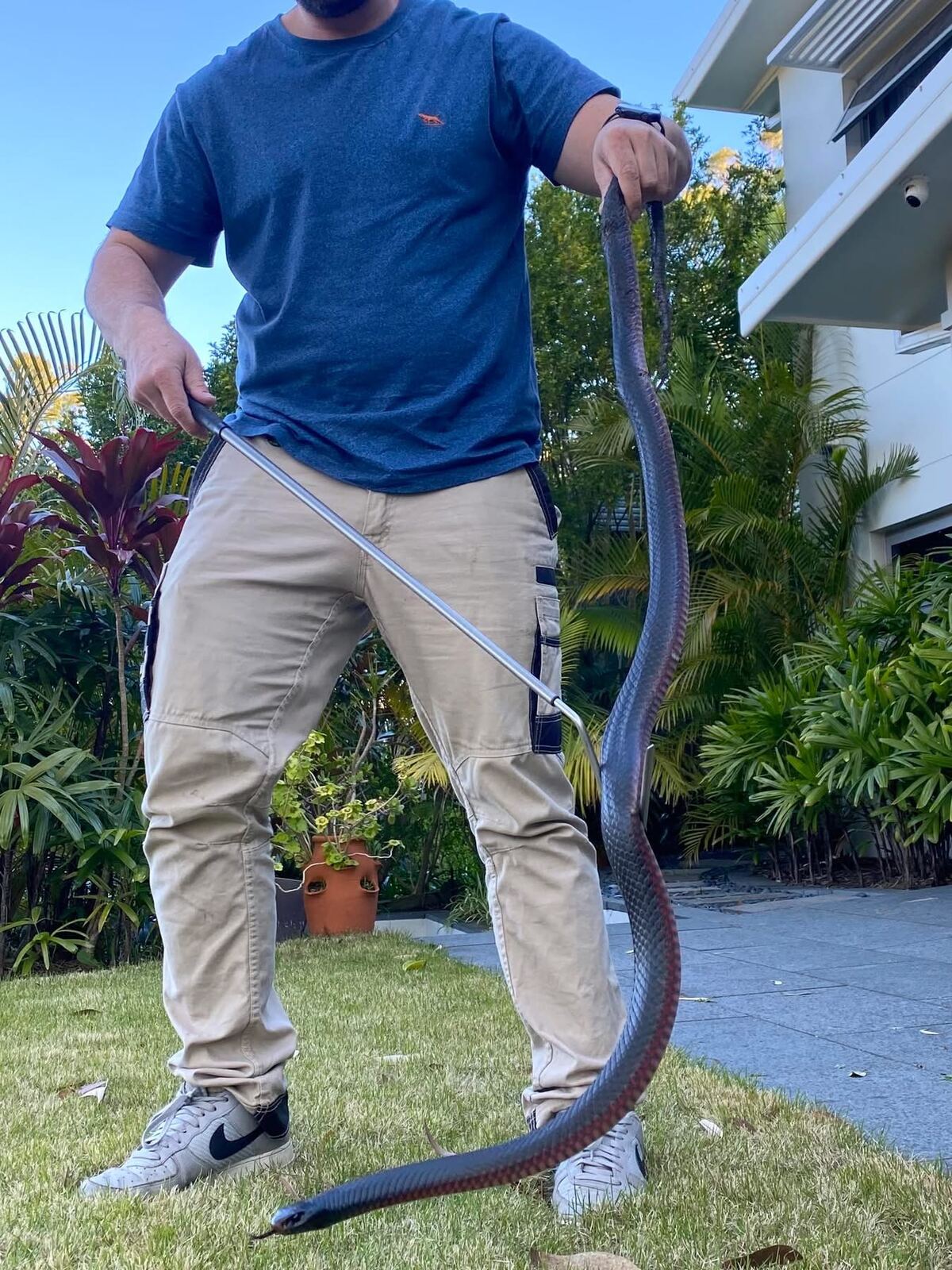
A licensed Shire Snake Wranglers catcher safely handling a Red-bellied Black Snake using professional equipment. Never attempt this yourself. Photo: Shire Snake Wranglers.
How to Prevent Snakes Climbing Around Your Property
The goal isn't simply to stop climbing — it's to remove the things snakes are looking for in the first place.
1Trim overhanging tree branches
Branches touching your roof create a natural bridge. Keep limbs at least 2–3 metres from the roofline where practical. This also discourages possums and rodents, which attract snakes.
2Control rodents
One of the biggest reasons snakes enter roofs and sheds. Store pet food in sealed containers, clean up bird seed, secure rubbish bins and address any infestations promptly.
3Keep gardens maintained
Dense vegetation covers movement for both snakes and their prey. Mow lawns, trim shrubs, remove long grass and clear timber piles regularly.
4Seal potential entry points
Inspect for gaps around doors, garage doors, vents, pipe penetrations, roof cavities and damaged screens. Even small openings can provide roof access.
5Remove outdoor clutter
Stacked firewood, corrugated iron, building materials, garden waste and storage piles all create snake shelter. Keep outdoor areas organised.
6Maintain bird aviaries and chicken coops
Birds, eggs and rodents attracted by feed can draw snakes. Clean spilled feed, store feed securely and repair damaged wire mesh promptly.
Common Myths About Climbing Snakes
Myth: Only pythons climb trees
Truth: Many Australian venomous snakes, including Eastern Browns and Red-bellied Blacks, are capable climbers.
Myth: Snakes can climb any wall
Truth: They need texture and grip. Smooth glass, polished metal and smooth rendered surfaces are generally impossible for them to scale.
Myth: A snake on your roof is trying to get inside
Truth: It may simply be crossing your roof, basking in the sun, following prey or moving between nearby trees.
Myth: Snakes fall from trees to attack people
Truth: If a snake falls, it almost always lost its grip or was startled. They do not deliberately drop onto people.
Myth: A climbing snake is more aggressive
Truth: Climbing is normal behaviour, not a sign of aggression. Like snakes on the ground, climbing snakes generally prefer to avoid people.
What to Do If You See a Snake on a Roof or in a Tree
Call a professional if the snake is:
Do not attempt to knock the snake down with poles, hoses or other objects. Do not climb onto the roof or into the tree yourself. DIY removal greatly increases the risk of a bite.
Related Articles
Frequently Asked Questions
QCan Eastern Brown Snakes climb trees?
Yes. Eastern Brown Snakes are capable climbers and may climb trees, shrubs, fences and rough walls while hunting prey or moving through their environment.
QCan snakes climb brick houses?
Yes. Brick walls provide mortar joints and rough surfaces that many snakes can use for grip. Homeowners sometimes assume a snake has 'jumped' onto the roof when it has simply climbed the brickwork.
QCan snakes climb into roof spaces?
Yes. Pythons commonly enter roof cavities in search of rats, mice and possums. Other species may also use roof spaces for shelter, particularly where prey is abundant.
QCan snakes climb smooth walls?
Generally, no. Perfectly smooth surfaces such as glass or polished metal provide insufficient friction. Even smooth rendered walls are much harder for snakes to grip than brick.
QCan snakes climb Colourbond fences?
Usually not if the fence is clean and smooth. However, nearby trees, trellises, garden furniture or stored items leaning against the fence can create alternative access.
QWhy would a snake climb a tree?
Common reasons include hunting birds, eggs or possums, escaping predators, basking in the sun, finding shelter, or travelling through its natural habitat.
QShould I try to remove a climbing snake myself?
No. Even experienced wildlife handlers use specialised equipment and assess the safest approach. DIY removal greatly increases the risk of a bite or injury.
Final Thoughts
Can snakes climb walls, trees and roofs? Yes — many Australian snakes are excellent climbers when the surface provides enough grip. Whether it's a Carpet Python in a ceiling, an Eastern Brown in a tree or a Red-bellied Black scaling a retaining wall, climbing is a natural part of their behaviour and not a sign of aggression.
By controlling rodents, maintaining your garden, trimming overhanging branches and sealing potential entry points, you can make your property far less attractive — and far less accessible — to climbing snakes.
Related Articles
Snake on your roof or in your ceiling?
Shire Snake Wranglers connects you with licensed, experienced catchers available 24/7 across New South Wales. Every removal is carried out in accordance with NSW wildlife regulations, with the safety of both people and snakes as the priority.